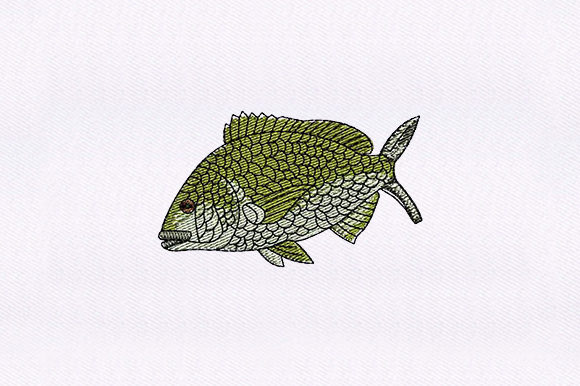
Reviewing the Green Fish Embroidery Design for Real Projects
As a professional embroidery designer, I regularly evaluate digital embroidery files for real client projects and my own handmade product lines. When I consider a new design, especially one with the visual appeal and potential commercial application of Green Fish, my first question is always: "Will this perform well in real-world embroidery and help me create a high-value finished product?" This review is my honest evaluation of the Green Fish embroidery design from Creative Fabrica, based on the perspective of using it for real orders.
First Impression and Project Fit
The Green Fish design immediately presents a detailed, decorative character. It carries a natural, organic mood that feels versatile—not overly cartoonish nor too rigidly realistic. This stitching personality makes it a strong candidate for projects where visual charm is key. I instinctively pictured it on a canvas tote bag, a cozy sweatshirt, or as a standout element on a kitchen towel. Its appeal leans towards giftable items, nursery decor, or boutique apparel where a touch of handmade artistry elevates the product.
Performance Across Different Embroidery Applications
Thinking through my typical project queue, Green Fish fits several niches. For custom apparel like sweatshirts or aprons, the design’s detail level suggests it could become a focal point, but its success would hinge on how those details translate to stitch density on potentially stretchy fabrics. On tote bags or pillow covers, where fabric is more stable, I anticipate fewer challenges. However, for curved surfaces like caps, I would be cautious; intricate elements might not sit perfectly on the seam without careful testing.
One of the most practical uses I considered was creating an embroidered patch. A well-executed Green Fish patch could be a fantastic product for Etsy sellers or craft fair vendors. The design’s inherent decorative quality could attract buyers looking for unique, nature-inspired embellishments. For baby items like blankets or onesies, the design’s theme is appropriate, but I would meticulously check the stitch density to ensure it remains soft and safe for delicate skin and frequent washing.
Navigating Practical Embroidery Considerations
Any experienced embroiderer knows a beautiful digital file must survive the transition to physical stitching. With Green Fish, my primary practical concerns would be its suitability for smaller hoop sizes and the behavior of any potentially tiny details. Does the design have very small areas of satin stitch or dense fill stitch that might become muddy on textured fabric? I would absolutely run a test on scrap fabric—first on a light background, then on a dark one—to check thread color contrast and see how the details emerge.
Using proper stabilizer is non-negotiable here. On any fabric, from stable cotton for a kitchen towel to a stretchy knit for a sweatshirt, the right stabilizer would be the guardian of this design’s integrity. After stitching, a close inspection of all layered details is crucial before committing it to a client’s item. For commercial embroidery or products meant for repeated sale, consistency in this outcome is everything for brand consistency and buyer trust.
Impact on Product Value and Customer Appeal
From a business perspective, using a high-quality embroidery file like Green Fish correctly can significantly boost a product’s perceived value. A clean, detailed embroidered fish on a tote bag transforms it from a simple carrier to a handmade product with story and craft. This enhances giftability and makes the item more compelling in product photography for Etsy listings or printable mockups.
For creative entrepreneurs selling digital embroidery files themselves, understanding how a design like this performs in real applications is also key. It informs how you might market it or what project examples you provide to your own customers. The visual appeal of the stitched sample directly affects customer engagement. A poorly stitched sample, even from a good file, can deter sales; a crisp, well-executed one can become a bestseller.
Essential Steps Before Selling Any Finished Product
My final, and most critical, advice for anyone considering Green Fish for their handmade shop or commercial embroidery projects is to do your due diligence. The product description notes it is a high-quality, detailed embroidery, but specifics are vital for professional use.
- Visit the Creative Fabrica product page for Green Fish and confirm all file details. Check the listed hoop size compatibility, available file formats for your machine, and any notes on stitch count.
- Review the licensing terms thoroughly before selling any finished items. This is fundamental for Etsy sellers, small business owners, and apparel decorators.
- Always stitch a test run. Compare results on light and dark fabric mockups to plan your thread palette.
- Evaluate the stitch density on your test piece. Is it appropriate for the fabric you intend to use most often? Will it withstand frequent washing if used on items like aprons or baby blankets?
In conclusion, the Green Fish machine embroidery design from Creative Fabrica presents a promising starting point for a variety of decorative projects. Its detailed aesthetic naturally suits gift-oriented, nature-themed handmade goods. Its true worth, however, will be determined not by the digital preview, but by how reliably it stitches out on your specific materials and for your intended applications. For professional crafters and business owners, that translation from file to fabric is where the real value—and the real risk—lies. A careful, tested approach will reveal whether Green Fish is a design you can confidently stitch for years to come.