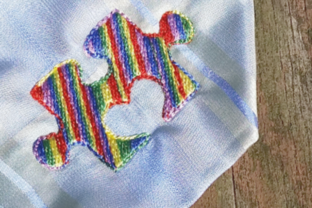
Beyond Awareness Ribbons: A Designer’s Take on the Mini Heart Puzzle Piece
When an embroidery design lands in my library, my first question isn’t about stitch count or file formats. It’s about character. What story does it tell on fabric? The Mini Heart Puzzle Piece design, from the first glance, tells a quiet, hopeful one. It sidesteps the overt, sometimes clinical symbolism often associated with awareness themes and offers something more intimate: a heart, incomplete yet connected, a puzzle piece seeking its match.
A Shape That Speaks Before You Stitch
The charm here is in the miniature scale and the soft, filled heart form. It’s not a bold graphic statement; it’s a delicate accent. This creates a mood of subtle recognition and personal connection. I imagine it stitched onto the cuff of a teen’s sweatshirt or the corner of a baby’s nursery blanket—a gentle nod rather than a loud declaration. Its visual personality is friendly and approachable, making it naturally belong to projects meant for close viewing, for gifts handled and cherished, not just seen from afar.
Where This Little Heart Finds Its Home
In practical application, this design’s small, filled nature makes it incredibly versatile. For custom apparel, think of it as a perfect secondary element. On a tote bag, it could accompany a name or a larger motif, adding a layer of meaning without overwhelming the layout. For a boutique selling personalized kitchen towels or aprons, it’s an ideal candidate for a monogram companion or a small corner detail.
Its true strength shines in projects where space is limited but sentiment is high. Embroidering it onto a cap’s curved surface or a baby onesie’s front pocket is feasible due to its compact footprint. As an embroidered patch, it would be small and sweet, easy to apply to journals or lightweight jackets. For holiday gifts like pillow covers or tea towels, it offers a way to personalize with a touch of empathy, making the gift feel considered and unique.
Caution on the Curve and the Cloth
While versatile, its filled stitch areas demand careful pairing with your base material. On very thin or stretchy fabrics, like certain t-shirts, the stitch density could potentially cause puckering if stabilizer choice and hooping aren’t meticulous. On textured fabrics like some blankets, the small details might get lost. Dark fabric backgrounds require a thoughtful thread color choice to ensure the heart’s shape remains crisp and clear—this isn’t a design you want to fade into the background.
For products destined for frequent washing, such as baby clothes or everyday kitchen towels, the integrity of those filled stitches is key. A robust stabilizer during embroidery and quality thread will ensure this little symbol lasts through many cycles, maintaining the value of the handmade product.
From Digital File to Customer Trust
How does this embroidery file translate to business value? For crafters and Etsy sellers, this design offers a way to elevate a simple item. A plain sweatshirt with this discreet, thoughtful embroidery suddenly has a story, increasing its perceived value and giftability. It builds customer trust by showing attention to nuanced design, not just trend-chasing. For a brand centered on empathy or connection, using this design consistently across products—like on tote bags, caps, and pillow covers—can strengthen brand consistency through a recognizable, yet subtle, visual token.
In printable mockups for digital product sellers or as a design asset for apparel decorators, its clean, filled shape renders well, allowing potential buyers to easily visualize it on their own projects. This clarity directly boosts buyer engagement, as the application is instantly understandable.
A Designer’s Practical Notes Before Hooping
Before I run this machine embroidery design for a client’s order or my own small shop merchandise, my process is always grounded in real-world testing.
- Always stitch it out on scrap fabric first. Use the exact material you intend for the final product—a canvas tote, a cotton sweatshirt, a linen tea towel. This reveals how the fill stitch behaves and whether any small details need adjustment for your specific machine.
- Check thread color contrast. Run tests on both light and dark fabric backgrounds. Sometimes a thread that pops on white looks muted on navy.
- Inspect the design in black and white. This helps you see the pure structure, ensuring the heart puzzle piece shape is clear even without color, which is crucial for visual appeal on varied backgrounds.
- Confirm your hoop size can comfortably accommodate the design. While it’s mini, you still need a stable hooping area around it for best results.
- Use a proper stabilizer. This is non-negotiable for maintaining stitch clarity and fabric integrity, especially on stretchy or lightweight materials.
- Most critically, check the licensing terms of the digital embroidery file before using it for commercial projects or selling finished items. Ensure your craft business or Etsy listings are operating on clear, legal ground.
The Mini Heart Puzzle Piece is more than an awareness category design. It’s a tiny, versatile tool for adding heartfelt depth to a wide range of embroidery projects. Its success lies not in its technical specs, but in your thoughtful application—choosing the right project, the right fabric, and the right story for it to tell. When stitched with care, it becomes a quiet beacon of connection on any surface it graces.